Showing posts with label Serbia. Show all posts

November 3, 2010

The World of Salvador Dali (1904 - 1989)

We had the pleasure of getting to know Salvador Dali’s art quite a bit better on this trip - before this we really only knew him as the eccentric melting clock painter (sorry for our ignorance). We have to say, we now have a new found appreciation and respect for his eccentricity.

Our first Dali encounter was in Belgrade at an exhibition entitled “Divine Worlds” where we saw hundreds of his graphic illustrations for two of his largest works: Biblia Sacra and Dante’s Divine Comedy. These illustrations were really quite something and were composed of many layers of colour. Here is an example:


This is an example of the progression of a drawing.  Each slide shows an additional layer of colour

Our second encounter was in his home town of Figueras at the Dali Museum in his former home. This was something else. Some compositions and montages were really strange where as others were just a little strange. But really, we were more than impressed and have to say that so far, this was our favorite museum. His graphic art which lined one hallway was extremely odd and hilarious at the same time. His paintings had such a great range - from very detailed and one would say very normal for Dali to one’s more in tune with the Dali we knew before, unusual and unexpected. Here is a picture of the museum from the back side. 


Click on this link to see some examples of the art at the museum: http://photobucket.com/dali_2010 (password: gala). 
 

October 29, 2010

Beautiful Serbia: Part IV - Sports


In order to ensure that everyone doesn't think that ALL we did was eat while in Serbia, we decided to include a mini blog dedicated to all the sporting activities we participated in which limited our growth to only 10lbs each. 

First there was a bowling night in Zemun where we were introduced to the one they call "Jesus", aka S's cousin Ivan.  The best way to desribe this man's skills is to compare him to Fred Astaire with the only difference being that Fred dances and Ivan bowls.  This was a great night through and through.  No need to talk about the scores as when you are this good (not), scores don't matter.  The important thing is form and looking good when you bowl.  Keep that in mind kids.  Winning is not everything.  
Then we moved to the red clay courts of Jagodina and the surrounding villages.  Here we brushed up on our tennis skills which helped us help Nole beat Federer in the semi-final of the US Open.  A little known fact is that the only reason Nole lost to Nadal in the final is because S&M were half way across the Atlantic.  But this little known fact should stay between us ;)   The  doubles competition was stiff at the Jagodina City Open but the organizers fed us well and lent us pants and shoes to play in.  The rest will remain in the Open's history books for the local people to admire. 

Oh yeah, we also did some mountain trecking and some extreme street walking (caution: don't try this on the streets of your home town).


like we said earlier, it's all about form

this is known as the "crouhing tiger" techique...

this is the "dislocated shoulder" technique


October 28, 2010

Beautiful Serbia: Part III - Moja Sumadija

One week of our trip to Serbia was spent in an area in central Serbia called Sumadija were both S&M's families are from.   The countryside is absolutely gorgeous and a wonderful place to relax .  We split our time between a small vacation town called Kosjeric and the village of Misevic up in the hills.  We visited family, ate lots of food (just can't seem to, nor want to, get away from it), made wine, visited a monastery and went to the wax museum in Jagodina city (saw Divac, Milosevic and Tito ... WHAT!!), went for walks and played some tennis.  Life is tough :)  We'll let pictures do the talking now. Here are a few and follow the link for more (password: relax):  http://photobucket.com/moja_sumadija.

First on making wine:


First you buy the grapes
Then you go to two guys with an electric machine to crush them and separate the stems (while you eat some grapes and watch from the sidelines)


Then you put the grapes into a big barrel to transport them home

Then you transfer them from the big barrel into these smaller barrels, add the yeast and sugar and let it sit for at least 10 days.  We hope it's good!!
 And here are some scenery shots:

Kosjeric - one of the few pics we got due to the rain
 
Misevic

The house in Misevic

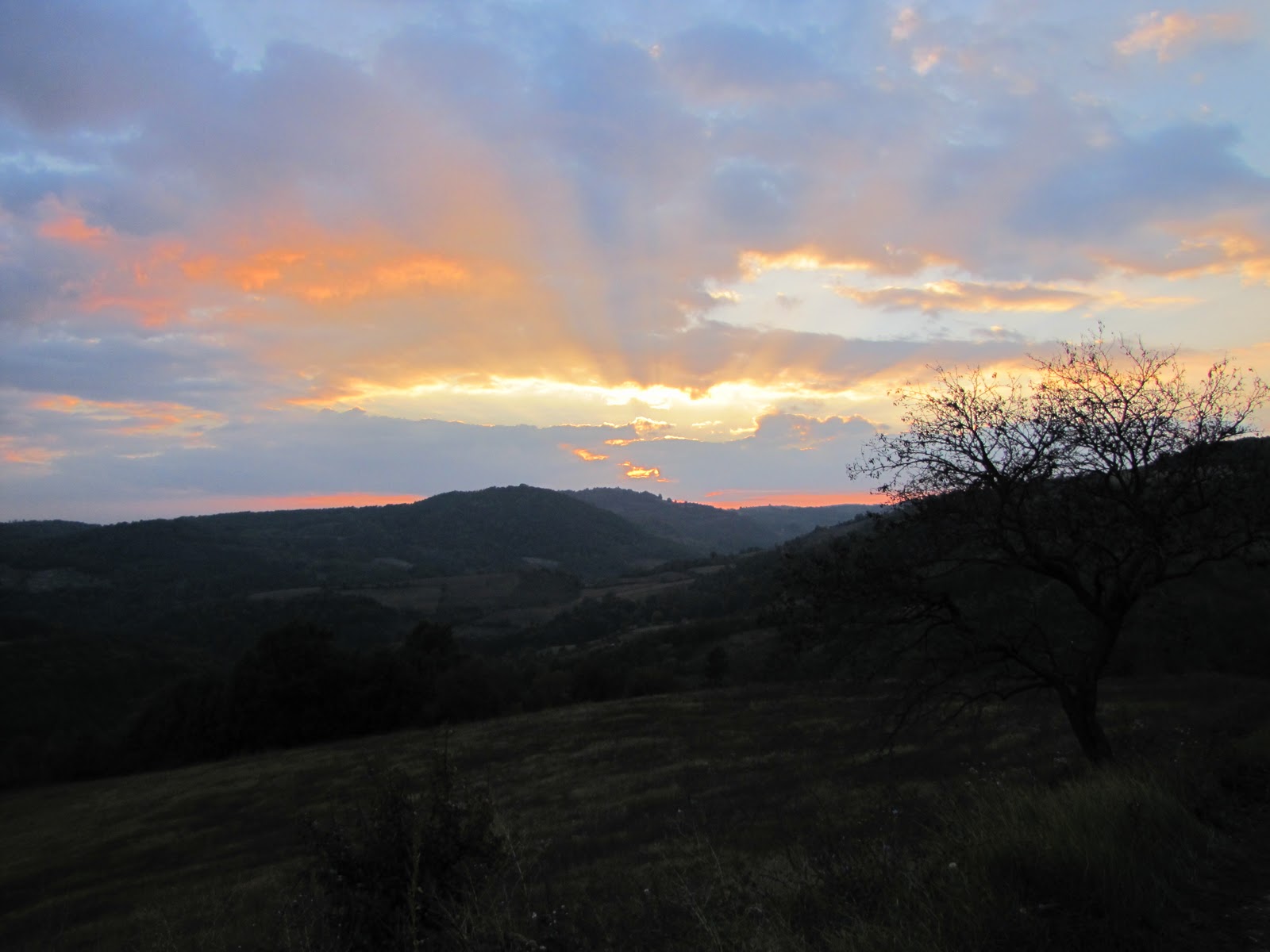
Sunset in Misevic
  
Vlade doing some heavy thinking


Beautiful Serbia: Part II - Just outside of Belgrade


 We did two short day trips while in Belgrade; one was to a town called Topola an the other was to the hill of Avala.  Topola is located about 85 km from Belgrade on the slopes of the Oplenac hill.   It is a well-known historical locaton assoicated with Karadjordje, a Serbian revolutionary chosen as the leader of the first Serbian uprising against the Ottoman Empire in 1804.  The beautiful white marbled five dome church that sits on top of the Oplenac hill is the burial place of the Karedjordjevac Dynasty.  The interior is quite something to see with its walls and ceilings decorated with a mosaic depicting Serbian Orthodox frescoes.  The mosaic consists of 60 million tiles!!  There is also this fantastic chandelier made from melted enemy weapons from WWI.  Unfortunately, cameras were not allowed inside so we don't have our own pictures. 


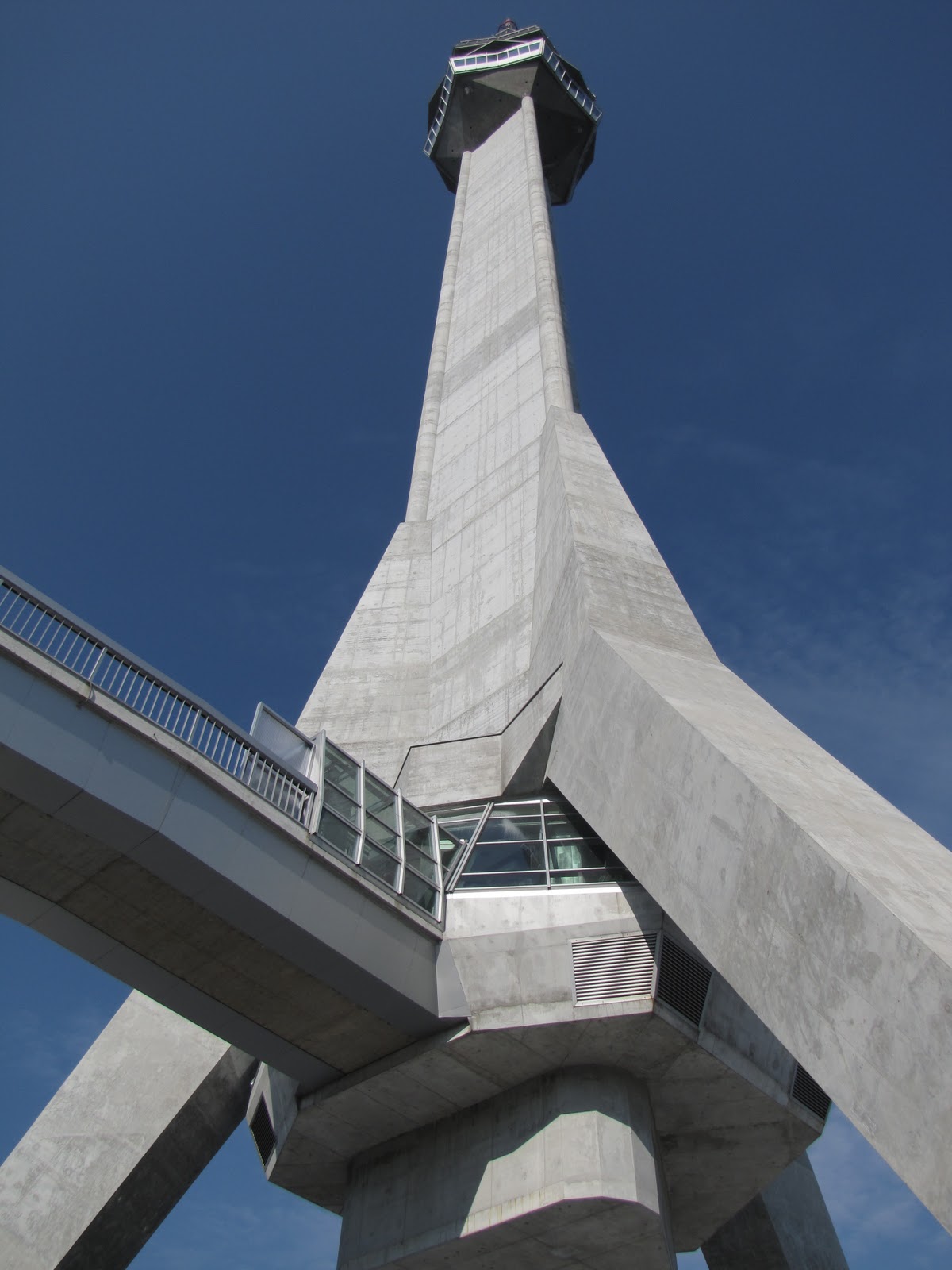
The hill of Avala is another great day-trip.  It is only 15 km's from downtown Belgrade and has a large recreational park, a monument to the unknown soldier (in honour of those who died in WWI) and the newly re-built Avala TV tower (the first one was destroyed in the NATO bombings in 1999).  The monument of the unknown soldier is an impressive marble structure housing eight female sculptures representing the mother of a soldier from each of the different nationalities forming Yugoslavia at that time. 


And suprise suprise, we ate an excellent rostilj at the Hotel Avala restaurant at the very top of the hill (several pictures of table spread were posted on our earlier food post J ).  Tip: If you do ever eat at this restaurant, don't have the muckalica, as the waiter put it, "they don't know how to make it well here".  Of course, a few words on the Avala TV Tower: its reconstruction was just recently refinished (April 2010) and it is currently the tallest structure in Serbia at 204m high (though its got nothing on our CN Tower). 


Inside the church on Oplenac (Courtesy of Flickr, Stanoslav Simic)

Avala Monument


A crater from the 1999 bombing on the Avala Monument


October 24, 2010

Beautiful Serbia: Part I - Belgrade (Beograd)

Our train ride to Belgrade from Budapest was filled with card-playing, beautiful scenery and a comical border crossing into Serbia. Our first passport check in Hungary was quite thorough with each immigration officer carrying a wireless passport scanner. Our second passport check on the Serbian side consisted of “good day and thank you” with barely a glance at your passport.  M has not been back to Serbia in 10 years due to mandatory military service, yet if he had known how easy it was to pass the Serbian passport control by train he would have been back a long time ago.

So now, M is finally home after 10 long years. S was there last year so it was so same old for her .. Kidding J . Of our 19 days in Serbia, 10 were spent in the capital, Belgrade. And would you believe it that in those 10 days, we spent a total of 6 hours walking around the city … if that much.. I know, crazy. The rest of our time was spent …. Come on guess … EATING and drinking coffee. So, while we can’t show you too many pictures of this beautiful city, we can tell you, that we had a wonderful time with our family and friends, and wouldn’t trade it in for the world.  
Now we did see some things, though we wish we had taken a few more pictures for this post but, we’ll work with what we have. Belgrade has gone through a lot in its history. It has been torn down and rebuilt countless times, starting from the Romans, to the Ottoman Empire, two world wars (during WWII it was bombed by both the Allies and the Nazis) and let’s not forget 10 years of civil war and the 1999 NATO bombing. All of this had an effect on the city either physically or financially. However, through all this hardship, Belgrade is re-emerging, and rebuilding itself back to the world class city that it was in the ‘80’s.


sunset looking down from Kalemegdan's Pobednik (The Victor)
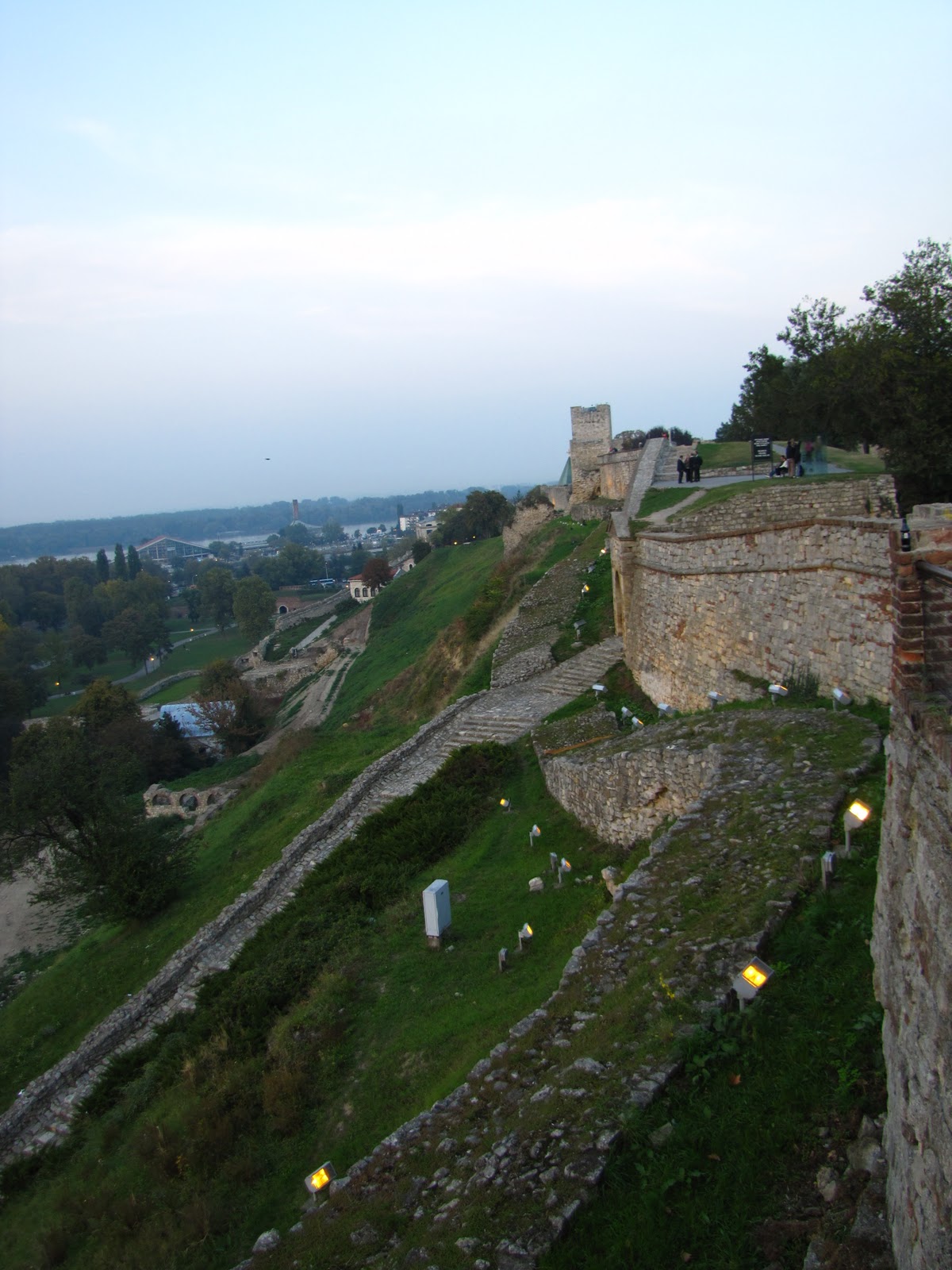
The Danube and the Sava river flow through Belgrade, dividing the city in two: old and new Belgrade. At the confluence of the Sava river into the Danube sits the Kalemegdan fortress, which is the oldest section of urban Belgrade and dates back to the 3rd century BC (when Serbs were eating with forks and knives and the rest of you savages were eating with your hands J ). No seriously, it is a beautiful place to walk around and one we made sure to visit. The grounds consist of cafes and restaurants, tennis courts (where the moats used to be - quite cool), basketball courts, an old church and plenty of green space. They also have art exhibits on the boardwalk overlooking the water and the best sunsets in Belgrade. When you exit Kalemegdan you end up at the beginning of Belgrade’s pedestrian shopping street, Knez Mihailova Street. 

Hram Svetog Save (Cathedral of Saint Sava)
Belgrade also has the largest Orthodox cathedral in the world: Hram Svetog Save (Cathedral of Saint Sava - who was the founder of the Serbian Orthodox Church). The Hram sits on the Vracar Plateau on the location where Saint Sava’s remains were burned in 1595 by the Ottoman Empire. From this location the Hram can be seen from almost anywhere in Belgrade and is a great orientation point. The construction of the Cathedral began in 1935 and it’s interior is still under construction (the constructoin of the church is being financed solely by donations) while the exterior and surrounding park is 95% complete.  


Last but not least is Belgrade’s night life, and what a life it is. Serbs really know how to celebrate and party.
Belgrade is said to be the party capital of Europe and we certainly understand (and felt) why. To experience its night life you have many options to choose from: bars, restaurants, nightclubs, kafana’s (typical Serbian restaurant playing live Serbian music until the wee hours of the morning which we had the pleasure … and pain the next day … of experiencing) and splavovi (barges on the Sava and the Danube). One definitely must go out to either a kafana or a splav (though we’d recommend both) when visiting Belgrade. They should be considered one of the top 100 things you do before you die. It’s impossible to describe the amazing atmosphere and depth of celebration/energy at a Serbian kafana … everyone is singing and dancing around with the Serbian band and trubaci (brass band). Just amazing. But watch out for the rakija (moonshine made of fruit such as plums, pears, apple and our chosen one was quince) - while delicious this brandy can be deadly.  

Splavovi (typical Belgrade barges)

Kafana Galeb in Zemun (Belgrade)

  confluance of the river Sava into the Denube


Pobednik ("The Victor" overlooking the two rivers)


Kalemegdan

 Kalemegdan

St. Sava Cathedral (Hram Svetog Save)


October 19, 2010

Food in our 1st Moon (Al sam gladan, al sam gladna, mm mm, yum yum yum)

Here is a little retrospective of food during our first moon (yup, one down, eight to go):
NYC - same food you would find back home in Toronto, just more expensive.  The New York pretzel is whatever (and according to M, borderline shit).  We would like to give special mention to two restaurants we ate at.  First night we ate at a fantastic Indian Restaurant around the corner from our apartment called Taj Restaurant (www.facebook.com/tajrestaurant).  We got these three dipping sauces and papari (thanks Harry G!) and Mango Lassi's while waiting for our take-out.  Yummy.  Then the food we ordered, which we asked for extra spicy, was exactly that and delicious.  The prices were great and we have to say, it was one of the better Indian experiences we've had.  Then there was Les Halles (http://leshalles.net/brasserie/, yet again, thank you Andrea and Paul!!) where we ate for S's birthday.  Some of you may have heard of the head chef there, Chef Anthony Bourdain, who wrote the great book Kitchen Confidential.  Fantastic French cuisine, along with a great atmosphere and decor.  We had a few entrees, the meat platter for two, chocolate cake and a bottle of red.  Heavenly and affordable.
Amsterdam – we were treated to wonderful food at home with Tina where we had our first taste of traditional Dutch breakfast bread which the Dutch use to keep regular (no joke).  We'd definitely eat it on a regular basis J.  We also had the pleasure of eating the Dutch caramel waffle (‘Stroopwafel’, S's favourite treat in Holland) and tried food we bought out of a whole in the wall, literally. There are these fast food joints with coin operated 8" x 8" holes where you can purchase mini burgers and various croquettes (cufte).  Not bad for a 1.05 Euros.

Febo fast food
Cvraci, now picture
these swimming in their own fa
Prague - We have to say that Czech food is very similar to Serbian food (as is the language).   We had a fantastic welcome Italian lunch with our fabulous hosts but here we're going to focus on traditional Czech cuisine.  We sampled a few traditional dishes that were a twist on what can be found in our motherland.  As expected, we stuffed ourselves silly and made everyone around quite uncomfortable with our ungodly consumption.  Special mention goes to the Cvarci we had (for those not familiar with this Eastern European delicacy, this is pork fat that has been boiled into curds in pork fat. Yup, you read that correctly.  In Serbia you can even get it smoked ... anyway, back to our story).  The cvarci were in a mason jar floating in their own fat, accompanied by dark rye bread and mustard.  OH MY GOD, was this ever delicious and we inhaled it (to M's astonishment, S absolutely loved it too ... and she says she's a healthy eater! ha!).  Next honourable mention has to go to the pickled sausage which we don't have in Serbia.  We would definitely have it again.  Last honourable mention from our tasting is pork salami encased in pork gelatin (or so we think).   And let's not forget that we had the pleasure of drinking communist coca cola (which we call Cockta in Serbia) - the one thing that the Communists managed to get right.    
Budapest - pastries, pastries and pastries.  We had great apple pie and yummy strudels and made only one bad choice when it came to pastries ... this awful chicken pastry which we found out was filled with nasty chicken liver that tasted like ass (we’re getting the shivers writing about it).   We also went out for a Hungarian dinner and had some so-so goulash and a decent new age meat platter (I know, we're all about the meat platters ... wait till you read the next part on Serbia). 

Karadjordjeva snicla
SERBIA - not that we're biased or anything but Serbia has hands down the best rostilj (BBQ) in the world.  Where do we start?!?  I mean from the internationally popular cevapi to the Karadjordjeva schnitzel (pork tenderloin rolled and stuffed with kajmak - Serbian cream cheese of sorts - breaded and deep fried .... heaven!!!), to pljeskavica (Serbian hamburger on steroids) to vesalica, which is either a grilled or smoked pork cutlet, to the punjena vesalica which is a pork cutlet stuffed with cheese and ham.  Let us stop for a second to wipe the drool from our faces.  Ok, we're back. 

Leskovacka Muckalica
In addition to the rostilj, you can order cooked dishes, our favourite being Leskovacka Muckalica (bbq pork, sometimes beef and deer as well, with stewed tomatoes, peppers, hot peppers, onions, etc) and a close second being wild game goulash.   Aside from meat, every meal is accompanied by roasted red peppers (either spicy or regular) sitting in a bit of oil and garlic and usually a simple salad such as: Sopska salata (tomatoes, cucumbers, onions and feta cheese), Srpska salata (tomatoes, onions, green peppers and cucumbers) or kupus salata (cabbage, oil and vinegar).  
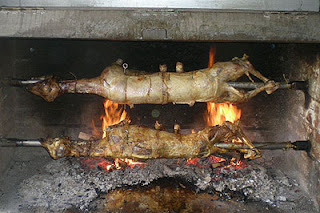
Before we move on from the meat portion, we have to pause and mention the rotisserie lamb we had in Mladenovac (a city about 50km from Belgrade) at a restaurant on the side of the road called MB Restaurant.  This place goes through 36 fully grown lambs a day which are made in a rotisserie next to the patio of the restaurant.  And it was FINGER LICKING GOOD!!!!  We devoured it.  The meat is usually accompanied by freshly baked bread (made on the premises), the roasted pepper salad mentioned above and 0.5L of draft beer. 
** Please note that including MB Restaurants, we ate at so many great restaurants in Belgrade and surrounding areas and Jagodina City :), including but not limited to: Cebic, Klub Knjizevnika, Lovac, Vitez, Hotel Avala and a fantastic fish place on the river Danube (where we saw the biggest cat fish EVER!!!).

Burek with cheese
Moving on to the breakfast and entree portion of the meal, one must mention the pitas and bureks. Pita is very similar to the Greek spanakopita except that it can be made with cheese, meat or cheese and spinach.  Burek is also made with phyllo pastry but this time in layers and filled with cheese, meat, mushrooms or left plain.  We had these with Serbian drinkable yogurt every morning in addition to french toast and rostilj :).
Do we even need to mention that we each gained 10lbs in Serbia or was that obvious??
* for those in the Toronto area who want to sample some of the Serbian meat dishes mentioned above please visit Royal Meats BBQ (www.royalmeats.ca) in Etobicoke. 

Lunch at Hotel Avala - Karadjordjeva, kupus salata, hot and sweet peppers

Lunch at Hotel Avala Part II - cevapi, sweet peppers, lepinja and a pork chop
dinner in Budapest with our meat platter :)